The organization
A millwork manufacturer in Rhode Island. High-mix custom work, one estimator, a small front office.
What was happening
Estimating was the constraint on the whole plant. Working out the materials for a job from drawings took up to a week and one person did it by hand. The shop could quote about one job a week, so most bid invitations went unanswered, and the amount of work the plant could take on was set by the estimator's calendar rather than by capacity on the floor.
What we looked at
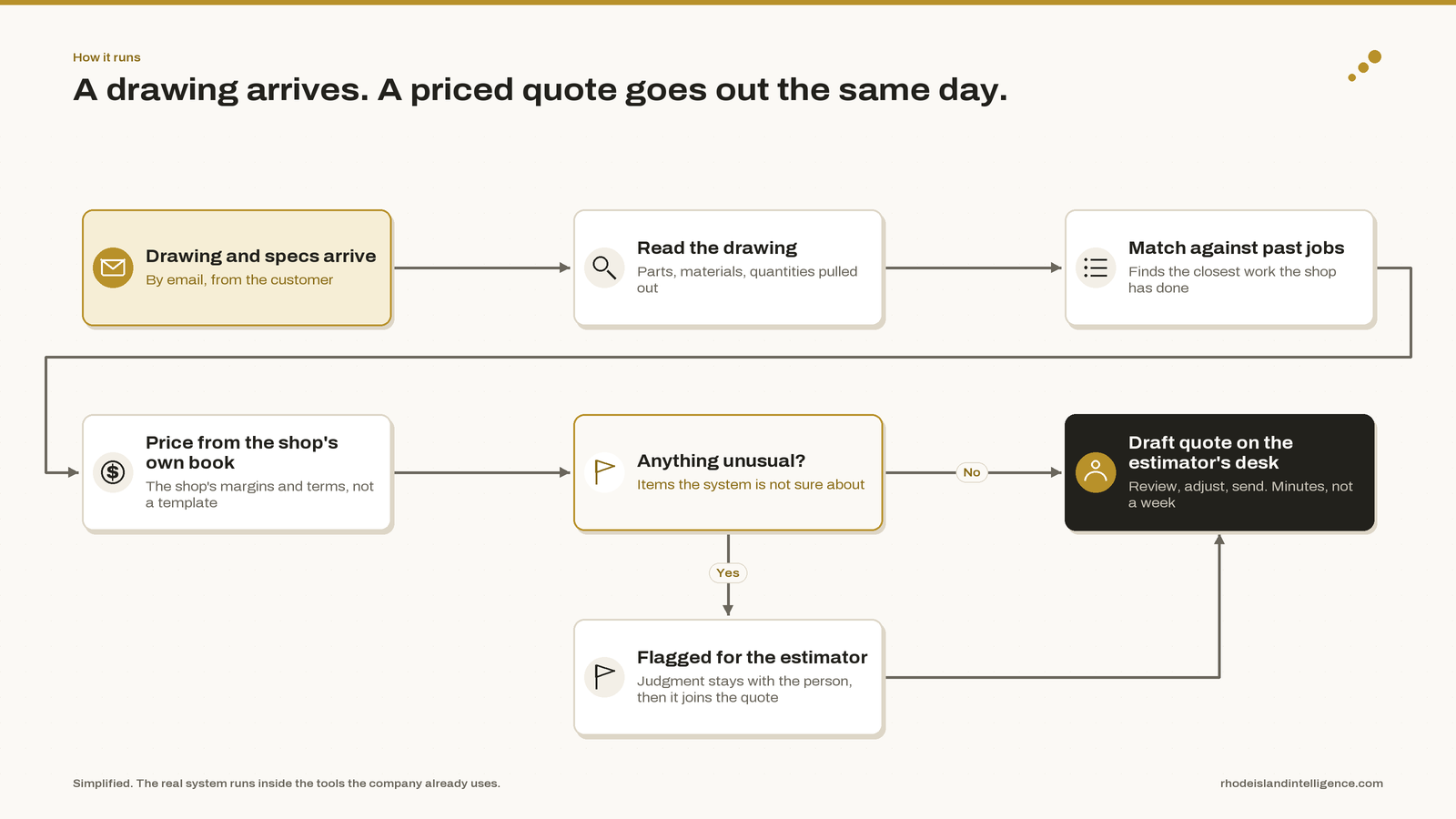
How a drawing arrived, how it was read, what got looked up and where, and where the estimator's time actually went. Most of it was retrieval and arithmetic. The judgment, which parts were unusual and how to price them, was a small fraction of the week.
What we built
A system that reads incoming drawings and specifications, breaks them into materials and operations, matches them against past jobs and the shop's own pricing, and produces a draft quote for the estimator to review and adjust. The judgment stayed with the estimator. Everything up to it was automated.
What changed
Quoting throughput went from about one job a week to about twenty, and the work coming into the plant roughly tripled. Same estimator, same front office. The next phase, connecting quoting to production scheduling, is in discussion.
More delivered work
- Millwork manufacturer Every invitation read as it arrives, added to the bid schedule and ranked against the plant's own criteria.
- Construction company Jobs, money and open issues on one screen, with urgent items pushed to the owner the moment they happen.
- Construction company What one person knew became procedures anyone can run, with visibility for the owner.