The organization
A general contractor in Rhode Island running several crews across concurrent jobs.
What was happening
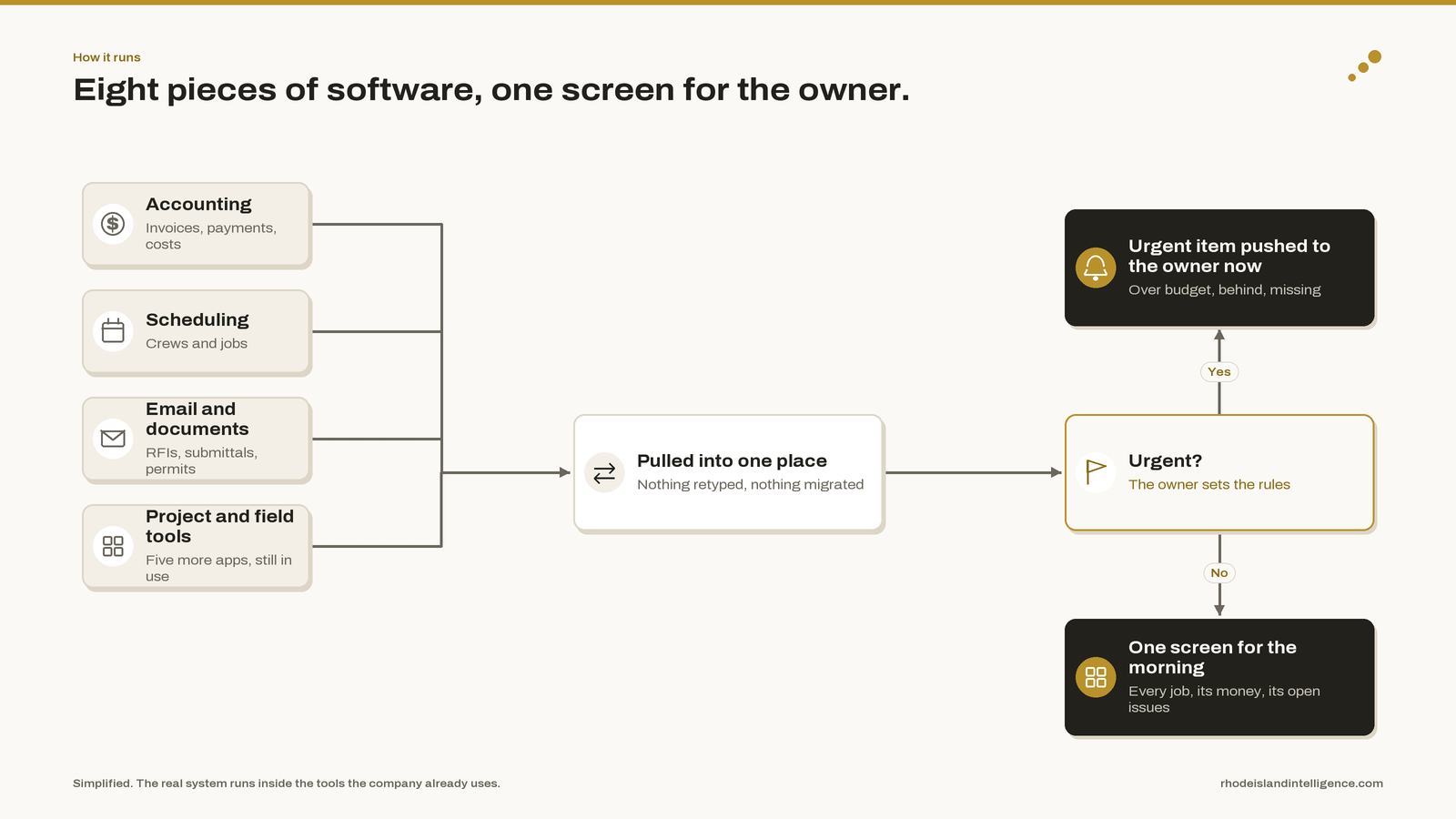
The company ran at least eight pieces of software and none of them talked to each other. Knowing where a job stood meant logging into most of them. Status lived in people's heads, problems surfaced late, usually when a number came in, and the owner spent the morning reconciling systems instead of running the company.
What we looked at
What the owner actually needed to know each morning, which system already held each piece, and where the delay between something happening and someone knowing about it came from. None of the systems needed replacing. They needed connecting.
What we built
One operational view that pulls from the existing systems, shows every job with its money and its open issues, and pushes anything urgent to the owner the moment it happens. The systems of record stayed exactly where they were.
What changed
One screen instead of eight logins. Problems show up the day they start instead of the week the invoice lands. The same structure is what a multi-site operator uses to see every location in one place.
More delivered work
- Millwork manufacturer Material takeoffs that took up to a week per job now take minutes, with the same estimator.
- Millwork manufacturer Every invitation read as it arrives, added to the bid schedule and ranked against the plant's own criteria.
- Construction company What one person knew became procedures anyone can run, with visibility for the owner.